Medtech Fixture Design
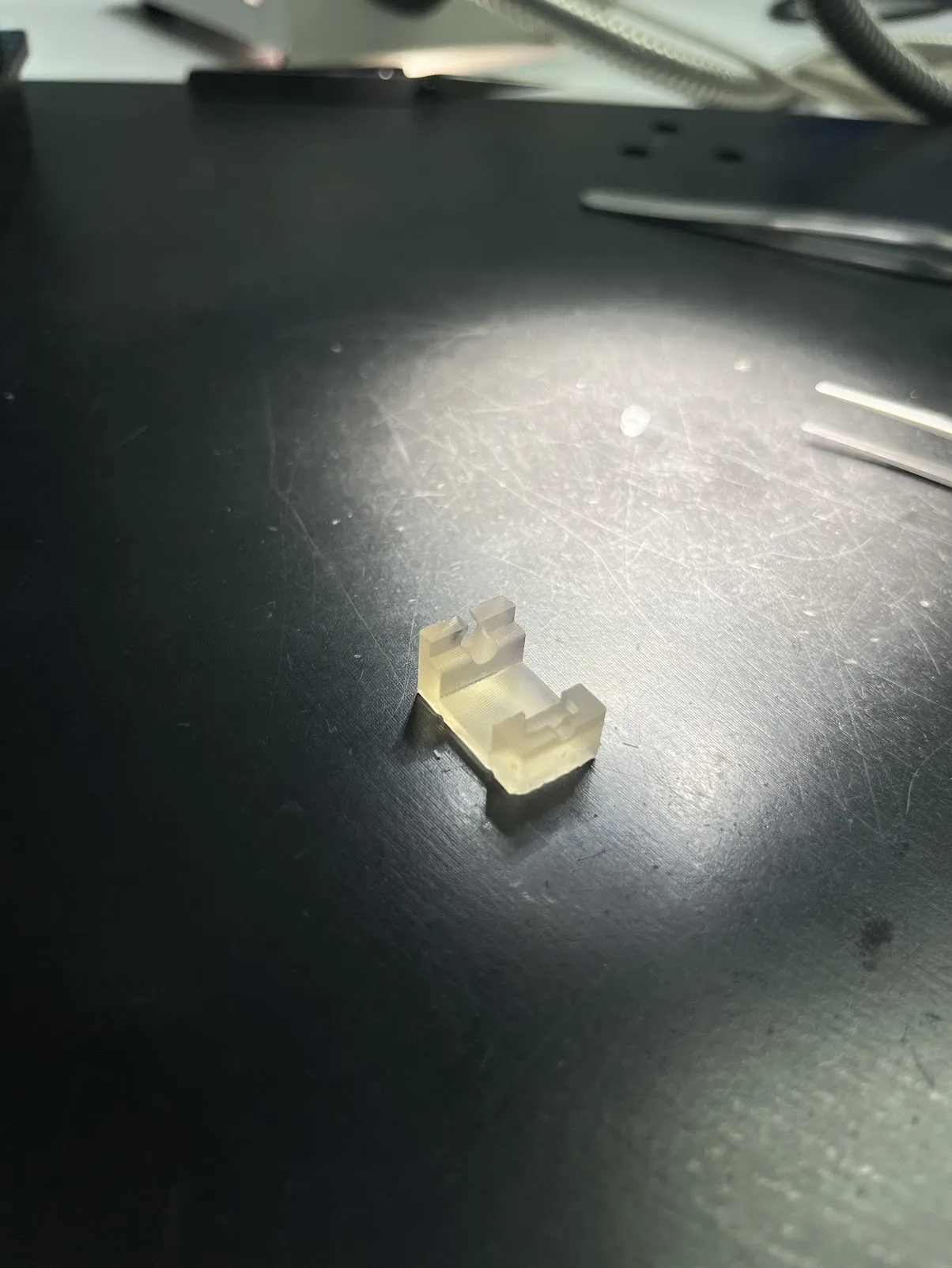
Designed and produced precision fixtures for medical device testing and manufacturing across two internships, using SolidWorks and FDM/SLA printing with application-specific material selection.
Problem / Goal
Across both internships, testing and manufacturing workflows periodically required fixtures to hold devices in precise positions, maintain alignment through repeated cycles, and keep results consistent regardless of who was running the procedure.
What I Did
For each fixture, I worked from the device’s physical specifications and built the geometry in SolidWorks to achieve a precise fit, thinking through print tolerances and the loads the part would see in use. I also made ergonomics and material economy an explicit part of every design — a fixture used dozens of times a day needs to be easy to load and unload, not just dimensionally correct.
I produced the parts on FDM and SLA printers, choosing material to match the specific demands of each application. One fixture had to hold an implantable device component in place while silicone adhesive cured at elevated temperature; I specified a high-temperature resin rather than a standard FDM material so the part wouldn’t deform mid-cure.
Results
Each fixture went from CAD model to a working part validated against the device and put into active use in testing or manufacturing workflows.
What I Learned
Coursework treats CAD as a modeling exercise. Fixture design made it concrete: every tolerance choice has a downstream effect on whether the part fits, functions under load, and can be reproduced reliably. Thinking through the operator experience — how someone picks the fixture up, loads a device, and resets it for the next cycle — became as important as the geometry itself.